
Starting a new business is an exciting experience. Entrepreneurs usually spend most of their time thinking about products, customers, sales, employees and business growth. However, one area that should never be ignored is business compliance.
For startups, maintaining proper compliance from the beginning can help create a strong foundation for long-term growth. This is where professional Startup Compliance Services can make a significant difference.
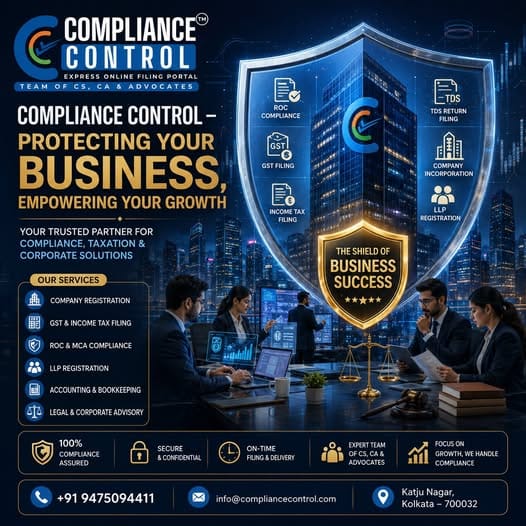
Compliance Control helps businesses organize their legal, financial, tax and corporate compliance activities so that important requirements can be monitored and handled on time.
Whether you are a newly incorporated startup, a small business, a growing company or an entrepreneur planning to expand, understanding your compliance responsibilities is essential.
What Are Startup Compliance Services?
Startup Compliance Services refer to professional assistance provided to businesses for managing their applicable legal, statutory, tax, accounting and regulatory obligations.
Company registration is only the first step. After incorporation, a business may have several ongoing responsibilities depending on its legal structure, business activities, employees, turnover and location.
Startup compliance services may include:
- Company compliance management
- ROC-related compliance
- Annual filing support
- Accounting and bookkeeping
- Income tax compliance
- GST compliance, where applicable
- Payroll-related compliance
- Corporate documentation
- Compliance calendar management
- Financial statement preparation
- Business documentation
- Regulatory compliance monitoring
The exact requirements depend on the business and applicable laws. Therefore, startups should ideally obtain professional advice based on their individual circumstances.
Why Is Compliance Important for Startups?
Many entrepreneurs think compliance is something they can handle after their business becomes successful.
This can be risky.
Compliance requirements may apply even when a company is relatively small. Missing important deadlines or failing to maintain proper records can create unnecessary financial and administrative problems.
Effective compliance management can help a startup:
Avoid Unnecessary Penalties
Late or incorrect filings may lead to additional fees, penalties or other consequences depending on the applicable requirement.
Maintain Proper Records
Organized accounting and corporate records make it easier to understand the financial and legal position of the business.
Build Business Credibility
A properly managed business can appear more reliable to customers, banks, investors, suppliers and other stakeholders.
Prepare for Future Investment
Startups planning to raise capital may need organized financial and corporate information during due diligence.
Support Business Growth
When compliance systems are established early, businesses can focus more confidently on expansion and operations.
What Is Compliance Control?
Compliance Control is a systematic approach to identifying, tracking, managing and reviewing a company’s compliance obligations.
Instead of waiting for a deadline or government notice, a business can maintain a structured compliance system.
A good Compliance Control process can include:
- Identifying applicable compliance requirements
- Creating a compliance calendar
- Maintaining important documents
- Monitoring filing deadlines
- Reviewing accounting records
- Preparing required filings
- Maintaining proof of submissions
- Reviewing compliance status regularly
This approach can make compliance more organized and easier to manage.
Key Areas Covered by Startup Compliance Services
Every startup is different, but several compliance areas are commonly relevant.
1. ROC and Corporate Compliance
Companies incorporated under the applicable corporate laws may have periodic filing and reporting obligations.
These can include annual returns, financial statements and other applicable corporate filings.
A professional compliance service can help monitor the relevant deadlines and documentation.
2. Income Tax Compliance
Businesses need to maintain proper financial records and manage their applicable income tax responsibilities.
Professional accounting and tax support can help businesses maintain better records and prepare relevant tax-related information.
3. GST Compliance
Depending on the nature and scale of the business, GST registration and compliance may apply.
Businesses registered under GST may need to manage:
- GST invoices
- Sales records
- Purchase records
- Input tax information
- GST returns
- Supporting documentation
GST requirements can vary according to business circumstances, so startups should obtain appropriate professional advice.
4. Accounting and Bookkeeping
Accounting is one of the most important components of business compliance.
Proper bookkeeping helps a startup understand:
- Revenue
- Expenses
- Profit and loss
- Cash flow
- Outstanding payments
- Business assets
- Liabilities
Accurate accounting records can also make tax and annual compliance processes easier.
5. Payroll Compliance
As startups begin hiring employees, additional responsibilities may arise.
Depending on employee strength, salary structure and applicable laws, businesses may need to manage payroll records, deductions and other employment-related requirements.
A professional compliance provider can help businesses understand which requirements apply to them.
Startup Compliance After Incorporation
One of the biggest misconceptions among new entrepreneurs is that compliance ends after receiving the incorporation certificate.
In reality, incorporation is only the beginning.
After incorporation, a company may need to establish:
- Corporate records
- Accounting systems
- Tax records
- Statutory registers
- Filing schedules
- Financial reporting processes
- Internal documentation
This is why startup founders should think about Startup Compliance Services immediately after registration.
Why Startups Should Use Professional Compliance Services
Managing compliance internally can become difficult, especially when founders are focused on running the business.
Professional support can provide several benefits.
Saves Time
Entrepreneurs can spend more time on sales, customers, product development and business strategy.
Reduces Administrative Burden
Compliance involves paperwork, records, deadlines and regular monitoring.
Professional assistance can make these activities more organized.
Helps Track Deadlines
A structured compliance calendar helps identify upcoming obligations.
Improves Record Management
Important business records can be maintained systematically.
Provides Ongoing Support
Instead of approaching different professionals for every compliance requirement, a comprehensive service can provide centralized support.
Compliance Control for Small Businesses
Compliance is not only important for large corporations.
Small businesses can also benefit from an organized compliance system.
For a small company, even a simple compliance control framework can include:
Monthly:
- Review accounting entries
- Check invoices
- Reconcile business transactions
- Review outstanding payments
Quarterly:
- Review tax-related requirements
- Check business expenses
- Review compliance status
Annually:
- Prepare financial statements
- Complete applicable annual filings
- Review corporate documents
- Evaluate upcoming compliance requirements
The exact schedule will depend on the business structure and applicable laws.
Common Startup Compliance Mistakes
Many new businesses make compliance mistakes simply because they do not have a proper system.
Ignoring Compliance Deadlines
A missed deadline can result in unnecessary costs and administrative complications.
Not Maintaining Accounting Records
Poor financial records make it difficult to calculate taxes and understand business performance.
Mixing Personal and Business Transactions
Separating business and personal finances can make accounting and financial management much easier.
Not Keeping Corporate Documents
Important incorporation and company records should be organized and safely maintained.
Treating Compliance as a One-Time Activity
Compliance is generally an ongoing responsibility rather than a one-time task.
Choosing Services Based Only on Price
The cheapest service is not always the most suitable.
Startups should consider experience, communication, transparency and ongoing support.
How to Choose the Right Startup Compliance Services
If you are searching for reliable Startup Compliance Services, consider the following factors.
Experience
Look for professionals who understand startup and small-business compliance requirements.
Transparent Pricing
Ask for a clear breakdown of professional fees and government or statutory costs where applicable.
Service Coverage
Check whether the provider handles only incorporation or also provides ongoing compliance support.
Communication
Your compliance provider should communicate important deadlines and required documents clearly.
Documentation
A good service provider should maintain proper records of filings and submissions.
Long-Term Support
Choose a provider who can support your business as it grows.
Compliance Control: A Better Way to Manage Business Compliance
A strong compliance system should not simply react to deadlines.
It should proactively monitor business obligations.
For example, Compliance Control can follow a structured process:
Step 1 – Identify
Determine which laws, registrations and filings apply to the business.
Step 2 – Organize
Collect and organize company, accounting and tax documents.
Step 3 – Schedule
Create a calendar of applicable deadlines.
Step 4 – Review
Regularly review financial and compliance records.
Step 5 – File
Complete applicable filings within the required timelines.
Step 6 – Record
Maintain proof of filing, payment and other important compliance actions.
Step 7 – Monitor
Review future obligations and changes that may affect the business.
This systematic approach can help reduce last-minute compliance pressure.
Startup Compliance Services for Growing Companies
As a startup grows, its compliance needs can become more complex.
For example, a growing business may:
- Hire more employees
- Increase turnover
- Register for additional taxes
- Open new offices
- Add shareholders
- Raise external investment
- Enter into larger contracts
- Expand into new markets
Each stage can create additional legal, financial or regulatory considerations.
Therefore, compliance systems should evolve with the business.
Why Compliance Control Matters Before Fundraising
Many startups eventually seek funding from investors.
During fundraising or due diligence, investors may review areas such as:
- Company structure
- Shareholding
- Financial statements
- Tax records
- Corporate filings
- Contracts
- Intellectual property documentation
- Employee records
If these records are incomplete or disorganized, the process may become more difficult.
Maintaining proper compliance from the beginning can help create a cleaner business record.
Compliance and Business Reputation
Compliance is not simply about avoiding penalties.
It can also contribute to business credibility.
A company that maintains proper records, follows applicable requirements and manages its finances professionally can be better prepared when dealing with:
- Corporate customers
- Banks
- Investors
- Vendors
- Employees
- Government authorities
Professional compliance management therefore supports both risk management and business professionalism.
Why Choose Compliance Control?
Compliance Control focuses on helping businesses establish an organized approach to their compliance responsibilities.
The goal is simple:
Register correctly. Maintain properly. File on time. Grow confidently.
For startups and growing businesses, professional compliance support can help reduce administrative pressure while keeping important obligations visible and organized.
From startup compliance planning to accounting, tax-related support and corporate compliance, having a structured system can make business management easier.
Final Thoughts
Starting a business requires more than a great idea. Entrepreneurs need a strong operational, financial and compliance foundation.
Startup Compliance Services can help new and growing businesses understand and manage their applicable obligations while allowing founders to focus on their core business activities.
With a proper Compliance Control system, businesses can monitor deadlines, maintain important records and develop a more organized approach to legal and financial responsibilities.
If you are launching a startup or managing an existing company, investing in professional compliance support from the beginning can help you avoid unnecessary complications and prepare your business for sustainable growth.
Compliance Control — helping businesses stay organized, compliant and ready for growth.
#StartupComplianceServices
#ComplianceControl
#StartupCompliance
#CompanyCompliance
#BusinessCompliance
#StartupIndia
#StartupConsultant
#CorporateCompliance
#ROCCompliance
#GSTCompliance
#TaxCompliance
#ComplianceServices
#BusinessConsultant
#SmallBusiness
#StartupSupport
#Entrepreneurship
#BusinessGrowth
#CompanyComplianceServices
#ComplianceManagement
#IndianStartups
