
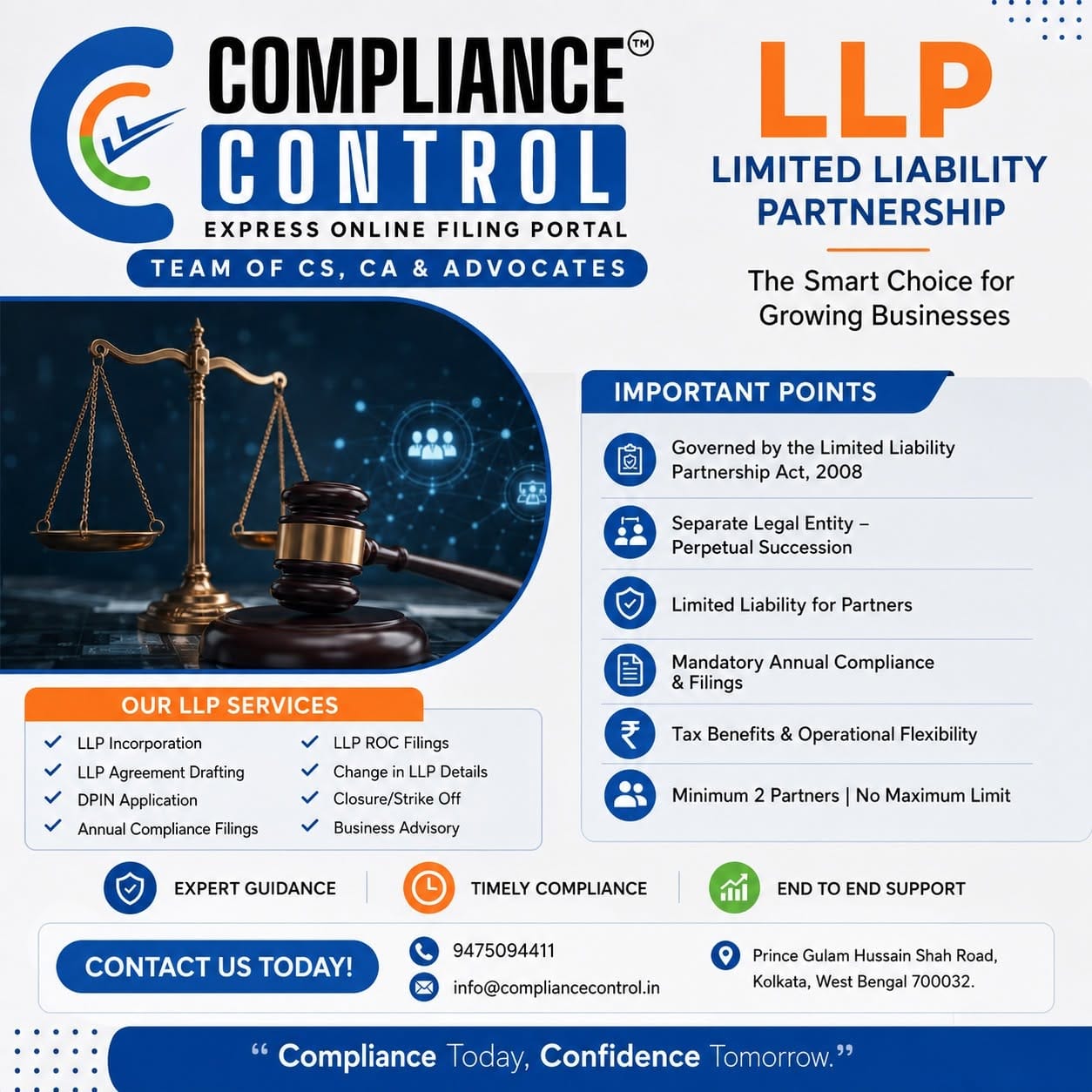
Starting a business is an exciting journey, but choosing the right business structure is one of the most important decisions entrepreneurs make. Among all business entities available in India, a Private Limited Company (Pvt Ltd) remains one of the most popular and trusted options for startups, SMEs, and growing businesses.
A Private Limited Company offers a separate legal identity, limited liability protection, better credibility, and improved opportunities for investment and expansion.
If you are planning to start a new venture, Private Limited Company Registration in India can provide a strong legal foundation for long-term business growth. Compliance Control helps entrepreneurs and business owners complete the registration process efficiently while ensuring compliance with regulatory requirements.
What is a Private Limited Company?
A Private Limited Company is a business entity registered under the Companies Act, 2013.
It operates as a separate legal entity from its owners and provides limited liability protection to shareholders.
Key Features
✔ Separate Legal Identity
✔ Limited Liability Protection
✔ Perpetual Succession
✔ Improved Business Credibility
✔ Easy Fundraising Opportunities
✔ Structured Business Operations
This structure is widely preferred by startups, technology companies, service providers, manufacturers, consultants, and growing enterprises.
Benefits of Private Limited Company Registration
Limited Liability Protection
The liability of shareholders is generally limited to the amount invested in the company.
Personal assets are generally protected from business liabilities.
Separate Legal Entity
A Private Limited Company can own assets, enter contracts, sue, and be sued in its own name.
Better Business Credibility
Registered companies often enjoy greater trust among:
- Customers
- Vendors
- Investors
- Financial Institutions
Easy Fundraising
Private Limited Companies can attract investors more easily compared to many other business structures.
Perpetual Existence
The company continues to exist regardless of changes in ownership or management.
Eligibility for Private Limited Company Registration
Generally, the following requirements apply:
Minimum Directors
At least 2 directors.
Minimum Shareholders
At least 2 shareholders.
Registered Office Address
A valid registered office address in India.
Legal Compliance
Compliance with applicable MCA requirements.
Documents Required for Company Registration
For Directors & Shareholders
- PAN Card
- Aadhaar Card
- Passport Size Photograph
- Email ID
- Mobile Number
- Address Proof
Registered Office Documents
- Utility Bill
- Rent Agreement (if applicable)
- No Objection Certificate (NOC)
Document requirements may vary depending on specific circumstances and regulatory updates.
Step-by-Step Process of Private Limited Company Registration
Step 1 – Digital Signature Certificate (DSC)
Digital signatures are required for electronic filing.
Step 2 – Director Identification Number (DIN)
DIN is required for company directors.
Step 3 – Company Name Approval
A unique company name is submitted for approval through MCA.
Step 4 – Incorporation Filing
Registration documents are filed with the Ministry of Corporate Affairs (MCA).
Step 5 – Certificate of Incorporation
Upon approval, the company receives its Certificate of Incorporation.
Step 6 – PAN & TAN Allocation
PAN and TAN are issued for tax-related compliance.
Why Startups Prefer Private Limited Companies
Startups often choose this structure because of:
✔ Investor Preference
✔ Professional Business Image
✔ Scalability
✔ Ownership Flexibility
✔ Better Growth Opportunities
✔ Strong Legal Framework
This structure supports long-term expansion and investment opportunities.
Importance of MCA Compliance
After incorporation, companies must comply with various statutory requirements.
Examples include:
Annual Filing
Submission of annual returns and financial statements.
Director Compliance
Maintaining director-related records and filings.
Statutory Registers
Maintaining required company records.
ROC Compliance
Regular filings with the Registrar of Companies.
Compliance helps avoid penalties and legal complications.
Additional Registrations Required After Incorporation
Depending on business activities, companies may require:
GST Registration
For businesses meeting applicable GST criteria.
MSME Registration
For eligible micro, small, and medium enterprises.
Trademark Registration
To protect brand identity.
Import Export Code (IEC)
For international trade activities.
Professional Tax Registration
Where applicable.
Common Mistakes During Company Registration
Choosing an Inappropriate Business Structure
The entity type should align with business goals.
Incorrect Documentation
Incomplete or inaccurate documents can delay registration.
Non-Compliance After Incorporation
Ignoring statutory obligations may result in penalties.
Improper Shareholding Structure
Planning ownership carefully is important for future growth.
Why Choose Compliance Control?
Compliance Control assists entrepreneurs and businesses with registration and compliance services designed to simplify the incorporation process.
Services Include
✅ Private Limited Company Registration
✅ LLP Registration
✅ GST Registration
✅ MSME Registration
✅ Trademark Registration
✅ ROC Compliance
✅ Business Advisory Services
Advantages of Working with Compliance Control
Professional Guidance
Expert assistance throughout the registration process.
Timely Filing
Efficient preparation and submission of documents.
Compliance Support
Ongoing regulatory assistance.
End-to-End Service
From registration to post-incorporation compliance.
Transparent Process
Clear guidance at every stage.
Who Should Register a Private Limited Company?
This structure is ideal for:
- Startups
- Technology Companies
- Consultants
- Agencies
- Manufacturers
- E-commerce Businesses
- Service Providers
- Growing Enterprises
Businesses seeking long-term growth often prefer this structure.
Future Growth Opportunities
A Private Limited Company supports:
✔ Business Expansion
✔ Investor Funding
✔ Strategic Partnerships
✔ Brand Building
✔ Market Credibility
✔ Long-Term Scalability
The structure is designed to accommodate business growth over time.
Conclusion
Private Limited Company Registration is one of the most effective ways to establish a legally recognized and scalable business in India. With benefits such as limited liability, separate legal identity, improved credibility, and investment opportunities, it remains a preferred choice for startups and growing enterprises.
If you are planning to start a business, Compliance Control can assist you with Private Limited Company Registration, compliance management, and business support services to help you build a strong foundation for future success.
FAQ
What is a Private Limited Company?
A business entity registered under the Companies Act that provides limited liability protection and separate legal identity.
How many directors are required?
Generally, a minimum of two directors is required.
Can startups register as a Private Limited Company?
Yes, it is one of the most popular structures for startups.
Is GST registration mandatory?
GST requirements depend on business activities and turnover thresholds.
Why choose Compliance Control?
Compliance Control offers registration, compliance, advisory, and regulatory support services for businesses across India.
#PrivateLimitedCompanyRegistration
#CompanyRegistrationIndia
#StartupRegistration
#PvtLtdRegistration
#BusinessRegistration
#MCARegistration
#ComplianceControl
#GSTRegistration
#MSMERegistration
#TrademarkRegistration
